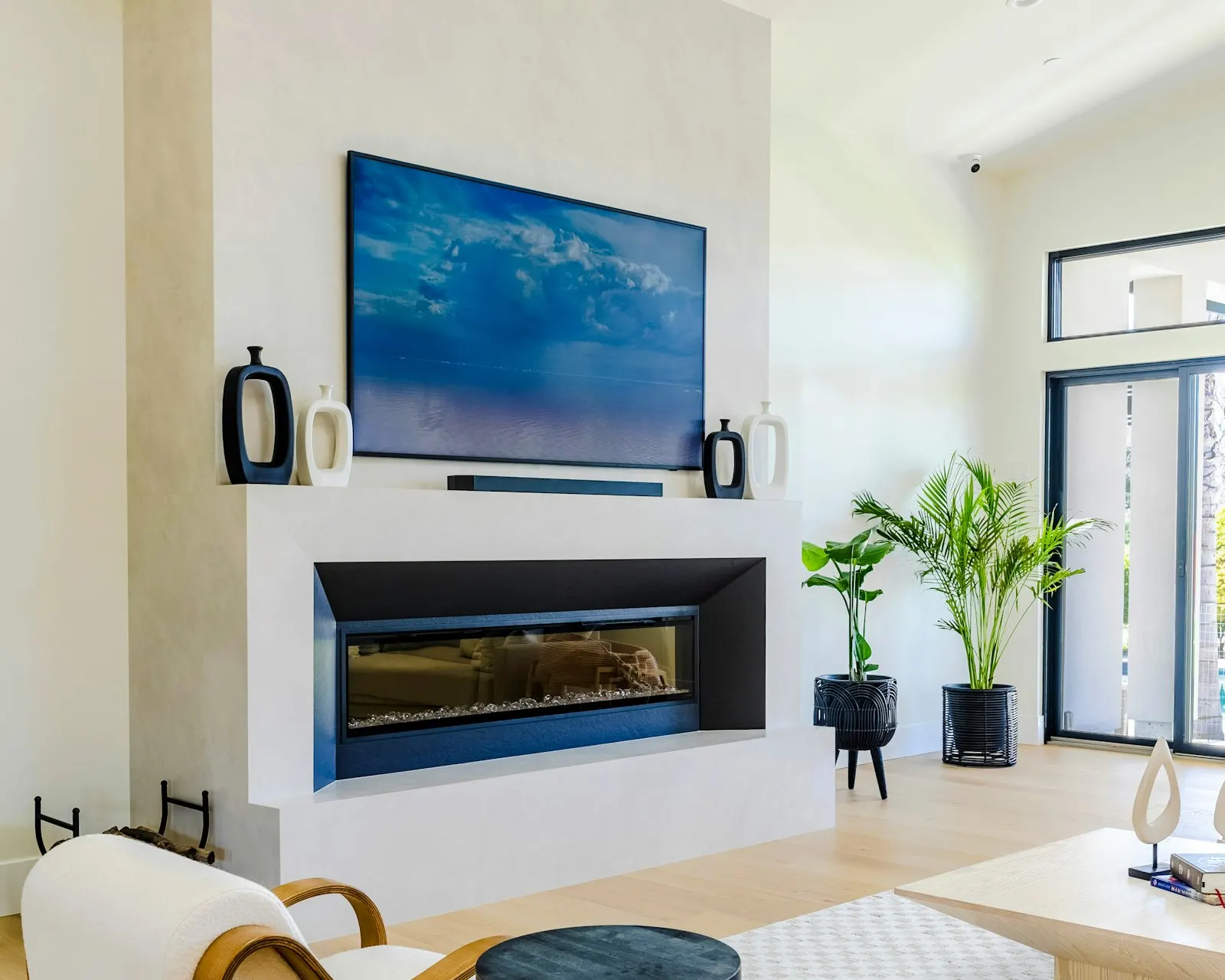
A wall-mounted TV frees up floor space, keeps screens out of reach of small hands and gives a living room a clean, finished look. It also puts a heavy, expensive piece of glass and electronics on a wall, held up by a handful of fixings. Getting those fixings right is the part that matters most, and it is the part most people cannot see once the TV is up.
We mount TVs in homes across Berwick, Narre Warren and the City of Casey, from a compact screen in a bedroom to large living-room displays on full-motion arms. Every installation starts with finding out exactly what the wall is made of and where the structure is, because that decides how the bracket is fixed.
What our TV mounting service covers
- Mounting TVs of most sizes on fixed, tilting and full-motion (articulating) brackets
- Locating studs, noggings and services in plasterboard walls before drilling
- Fixing into brick, double brick, concrete block and rendered walls with suitable masonry anchors
- Adding timber backing behind plasterboard where stud positions do not suit the bracket
- Positioning the screen at a comfortable viewing height for your seating
- Mounting soundbars on brackets below or above the TV
- Surface cable covers painted to match the wall for a tidy finish
- Mounting TVs above fireplaces where the wall and heat clearance allow
- Taking down old TVs and brackets and patching the holes
- Mounting monitors, small screens and outdoor-rated TVs under alfresco roofs
We can supply a bracket or install one you have already bought. If you are buying your own, we are happy to advise on the right type for your wall and TV before you purchase.
Choosing the right bracket
Fixed brackets
Fixed brackets hold the TV flat and close to the wall. They are the neatest option when the screen is at the right height and directly facing the seating. They suit most living rooms and bedrooms.
Tilting brackets
Tilting brackets let the screen angle down a few degrees. They help when the TV is mounted a little higher than ideal, such as in a bedroom where you watch from bed, or to reduce glare from a window.
Full-motion brackets
Full-motion arms let the screen pull out from the wall and swivel. They suit open-plan rooms where you watch from the kitchen and the lounge, or corner positions. They put far more leverage on the wall when extended, so the fixing has to be into solid structure, never into plasterboard alone.
Checking compatibility
Every TV has a VESA mounting pattern on the back, and a weight. The bracket must match the pattern and be rated well above the TV’s weight. We check both before installing.
Fixing into different walls
Plasterboard on timber studs
Most internal walls in Casey homes are plasterboard over timber or steel studs. We locate the studs and fix the bracket into them with suitable screws. Studs are rarely in exactly the spot you want the TV, so for some brackets we install timber backing between studs or use a bracket wide enough to reach two studs. Plasterboard anchors on their own are not suitable for TVs on articulating arms.
Brick and block
Many homes have a brick feature wall or an external wall where the TV goes. Brick and block need masonry anchors chosen for the material and drilled carefully to avoid blowing out the back of hollow bricks. Rendered walls hide what is underneath, so we drill a pilot to check before committing.
Steel studs
Some newer builds and apartments use steel framing. These need specific fixings designed for steel and sometimes backing plates.
Hiding cables
Loose cables hanging below a mounted TV spoil the look. We offer surface-mounted cable covers that run from the TV to the cabinet below and can be painted to match the wall. Running cables inside the wall cavity is possible in some situations using in-wall cable kits designed for low-voltage leads. Moving or adding a power point behind the TV is electrical work and must be done by a licensed electrician; we can coordinate with your electrician so they install the outlet before we mount the screen.
Viewing height and position
A common mistake is mounting the TV too high. For most living rooms, the centre of the screen should be close to eye level when seated, which is lower than many people expect. Over a fireplace or a tall cabinet the screen often ends up too high, and a tilting bracket helps. We talk through your seating and room layout and mark the position before drilling, so you can check it on the wall first.
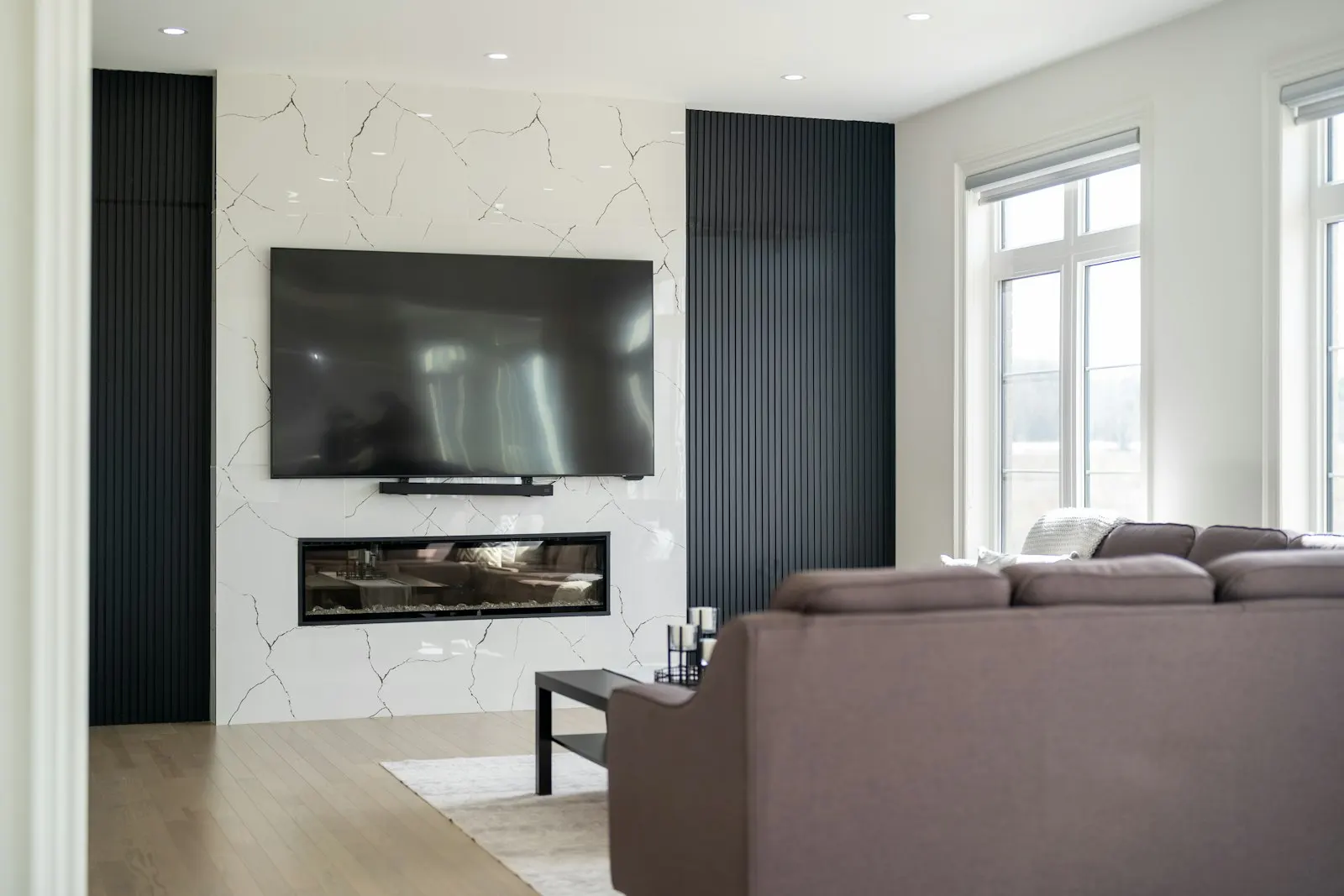
Mounting above a fireplace
Mounting over a fireplace or gas log heater looks great but needs care. Heat rising from the fire can damage TVs, and many manufacturers specify clearances. The wall above a fireplace may also be masonry, a flue cavity, or framing around a flue. We check the construction and heat clearance and will advise if another position is safer for your TV.
Outdoor and alfresco TVs
Alfresco areas are common in newer homes around Berwick Springs, Lynbrook and Narre Warren South. Outdoor TVs should be rated for outdoor use or protected from weather, and mounted to the structure, not cladding alone. Power outdoors must meet electrical safety rules, which is a job for an electrician.
Soundbars and accessories
Soundbars can be mounted below the TV with dedicated brackets or attached to some TV brackets. We can also mount small media boxes, streaming devices and game consoles on shelves or brackets near the TV, keeping the area tidy.
Moving or removing a TV
When you move house, renovate or upgrade the TV, the old bracket comes off and leaves holes. We remove brackets, patch and sand the plaster, and can prime it ready for paint. See plaster and wall patching.
What to send us
For an accurate quote, send:
- The TV make and model, or the screen size and weight
- The bracket type you want, or the model if you have one
- A photo of the wall and the room
- What the wall is made of, if you know
- Whether power and antenna points are already in place
Safety first
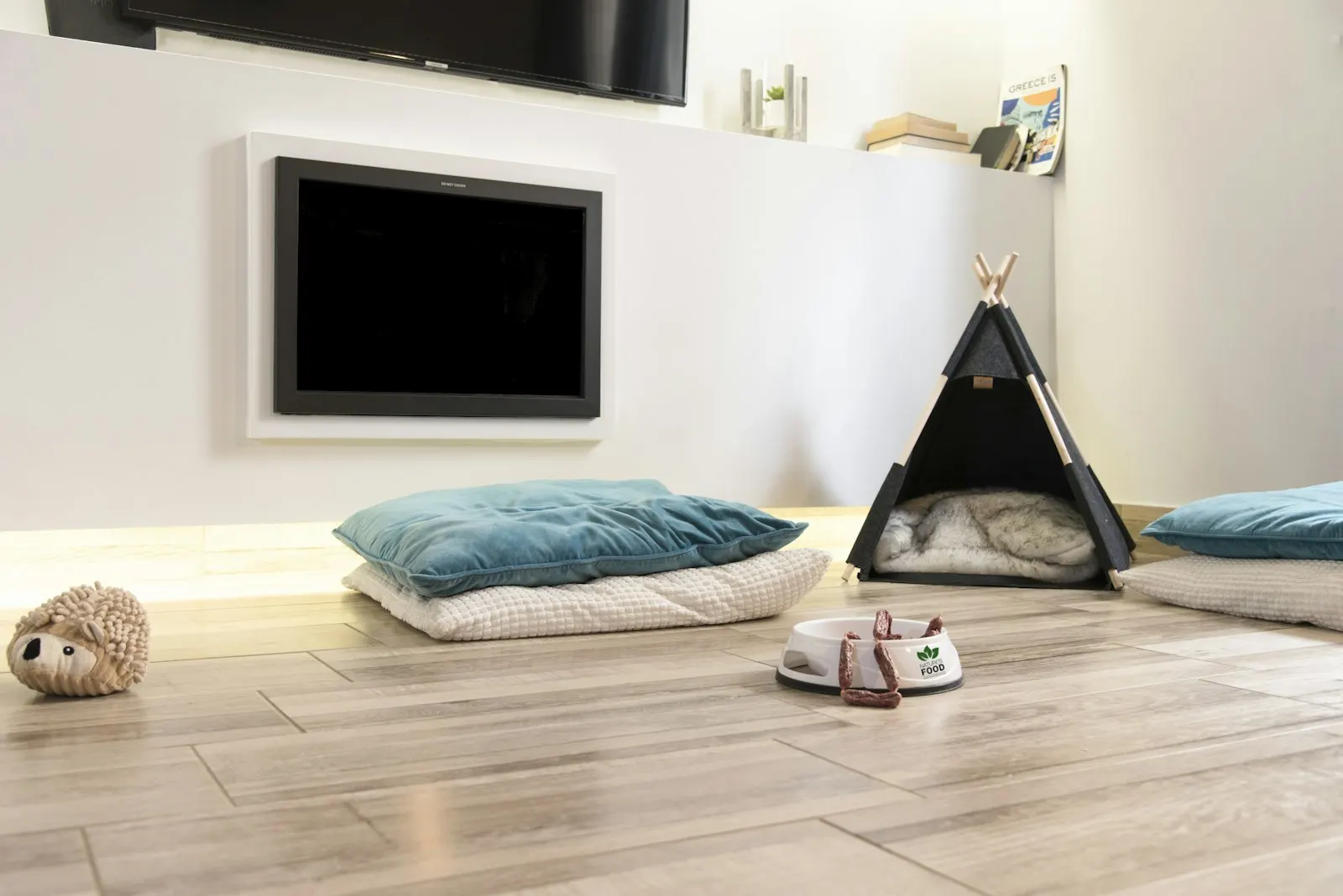
Wall-mounted TVs that fall can cause serious injury, particularly to children. Even on a stand, TVs should be anchored. We fix every bracket into solid structure, check the TV is locked onto the bracket with its safety screws, and test it before we leave. If a wall is not suitable for the TV and bracket you have chosen, we will say so rather than install something unsafe.
Related services
- Picture and shelf hanging
- Flat-pack assembly for TV units and cabinets
- Plaster and wall patching
- Carpentry for custom shelving
Areas we cover
TV wall mounting across Berwick, Narre Warren, Narre Warren South, Narre Warren North, Narre Warren East, Hallam, Hampton Park, Lynbrook, Lyndhurst and Harkaway. Read our TV mounting guide for more detail on brackets and walls.
Hollow walls, feature walls and tricky spots
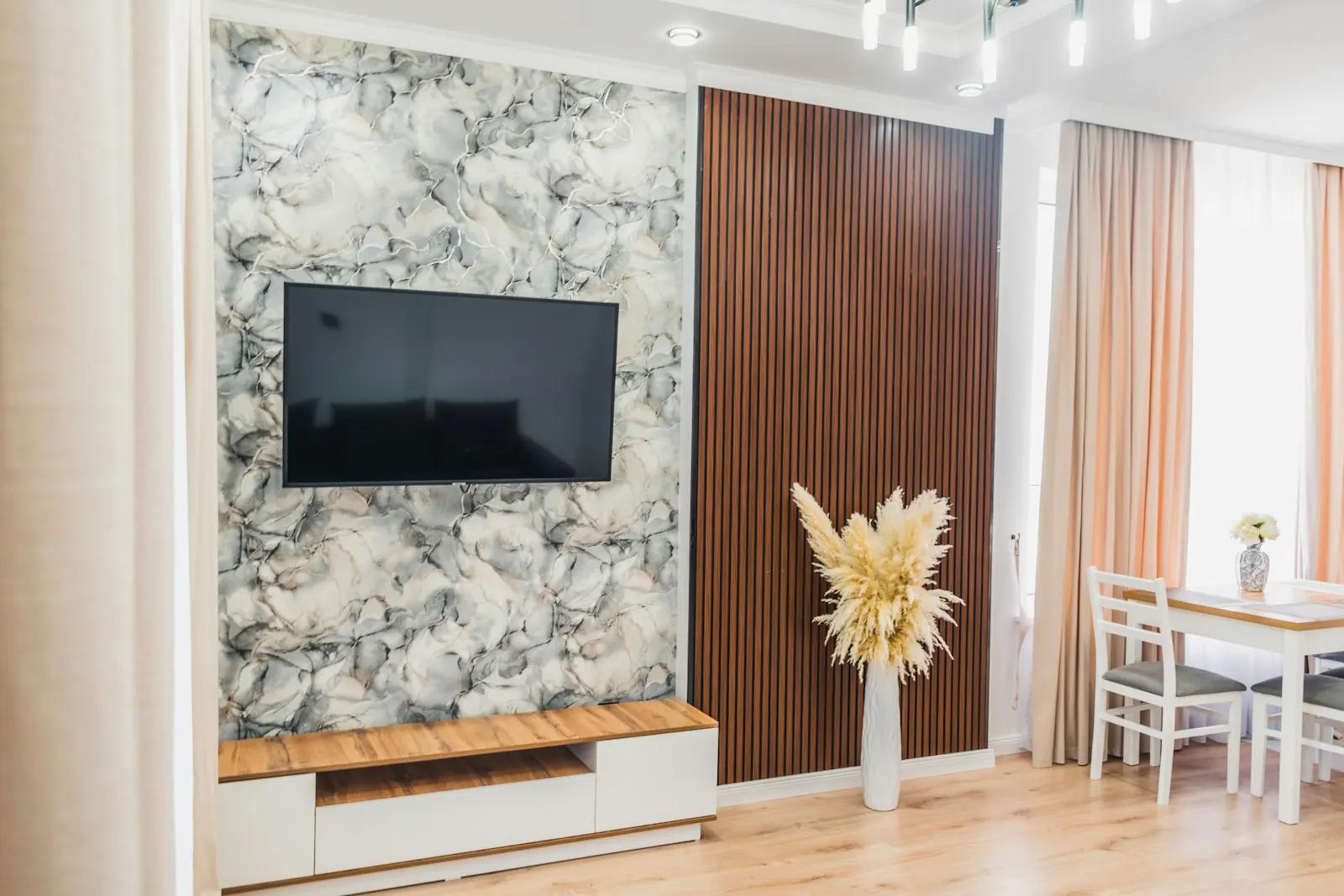
Some locations are harder than they look. A hollow feature wall built out from the main wall, a bulkhead, a wall with a window beside it or a corner where two walls meet can all complicate mounting. Feature walls clad in timber battens or stone veneer need fixings that go through the cladding into structure, and care so the finish is not damaged. Corner mounts usually call for full-motion arms with enough reach to centre the screen. We look at each spot and recommend a bracket and fixing method that suits it.
Children, pets and full-motion arms
Full-motion arms are convenient, but they can be pulled on. In homes with toddlers, we often recommend a fixed or tilting bracket at a height that keeps the screen out of reach, with cables covered so they cannot be grabbed. If you do want an articulating arm, we make sure it is fixed into solid structure and that the TV is locked onto the bracket with its safety screws.
Planning a new room or renovation
If you are building or renovating, plan the TV position early. Ask your builder for timber noggings at the bracket height and have your electrician place a power point and antenna or data outlet behind where the TV will sit. A conduit through the wall for HDMI leads makes cable hiding easy later. When the room is finished, mounting the TV becomes a quick, clean job.
Bedroom, kitchen and second-room TVs
Not every screen goes in the main living room. Bedroom TVs often work best on a tilting bracket mounted slightly higher and angled down toward the bed. Kitchen and family-room screens can sit on slim fixed brackets clear of benches and splash zones, away from heat from the cooktop. Kids’ rumpus rooms and teenagers’ rooms may need a screen out of the way of balls and games. Home gyms in garages are another common spot, where the wall might be brick, block or plasterboard over studs. We work out the best spot and bracket for each room.
After the install
Before we leave, we check the TV is level, securely locked onto its bracket, and that full-motion arms move smoothly without the wall flexing. We tidy cables, remove packaging if you would like, and vacuum any drilling dust. You get the bracket instructions and any spare parts to keep.
Brackets for very large screens
Screens of 75 inches and larger are increasingly common. They are heavy, wide and awkward to lift, and they need brackets rated for their weight and size. We bring a second set of hands for large screens where needed, and mount the bracket across two or more studs or into masonry so the load is spread properly.
Frequently asked questions
Can you mount a TV on plasterboard?
Yes, by fixing into the timber or steel studs behind the plasterboard, or into timber backing we add. Plasterboard alone is not strong enough for TVs on full-motion arms.
Do you supply the bracket?
We can supply a suitable bracket or install one you have bought. If you are buying your own, we can advise on the right type and rating for your TV and wall first.
Can you hide the cables in the wall?
Surface cable covers are the simplest option. In-wall cable kits for low-voltage leads can work in some walls. Moving or adding a power point is electrical work and needs a licensed electrician.
Is it safe to mount a TV above a fireplace?
It can be, if the wall construction is suitable and the heat clearance meets the TV maker’s guidance. We check both and will advise if another position would be safer.
How high should a TV be mounted?
For most living rooms, the centre of the screen should be near seated eye level. We mark the position on the wall first so you can check it before we drill.
Get a free quote
Send us your list of jobs, your suburb and a few photos. We will reply with a clear written scope and a free, no-obligation quote.
Get a free quote